日本語
日本語
 한국어
한국어

Sensor Technology Trends 2026: Applications Across Every Industry
- Industry Insight
- industrial sensor manufacturers
- modern sensor applications
- sensor technology in IoT
- industrial sensor system integration challenges
The sensor industry is undergoing a structural transformation. As systems across automotive, industrial, healthcare, and consumer electronics grow increasingly complex, the traditional "good enough" standard for sensor selection is being replaced by a far stricter benchmark: not whether a sensor can detect a signal, but whether that data can reliably flow through the system to support real-time decision-making. This shift is redefining the sensor's role, transforming it from a standalone, single-function device into a critical entry point within a system-level sensing architecture. This article explores that transformation, from single-point sensing to system-level sensing, examining the technical drivers reshaping sensor design and the real-world applications where this shift is already taking hold.
How Sensor Technology Creates Real Industry Value?
First, let’s take a quick look at the role modern sensors play in intelligent systems. They basically act as the “perception layer” of the whole system, collecting real-time data and helping support automation and decision-making across different industries.
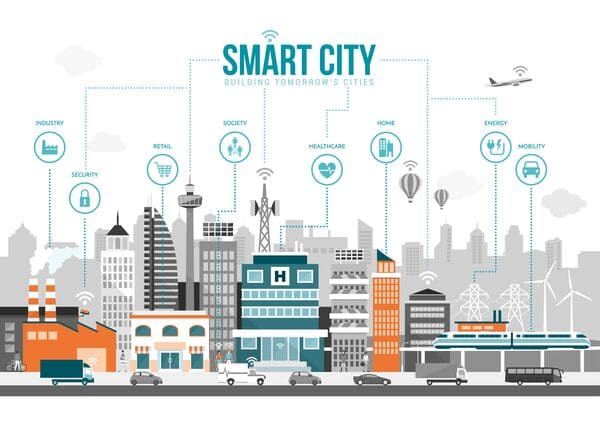
1. Smart City Operation and Management
Sensors form the backbone of smart city infrastructure. Distributed sensor networks enable real-time monitoring of traffic flow, environmental quality, energy consumption, and public services.
| Application Area | Sensor Function | Core Value |
|---|---|---|
| Traffic Management | Flow and speed detection | Reduces congestion |
| Environmental Monitoring | Air, noise, and water sensing | Pollution early warning |
| Energy Systems | Consumption tracking | Energy optimization |
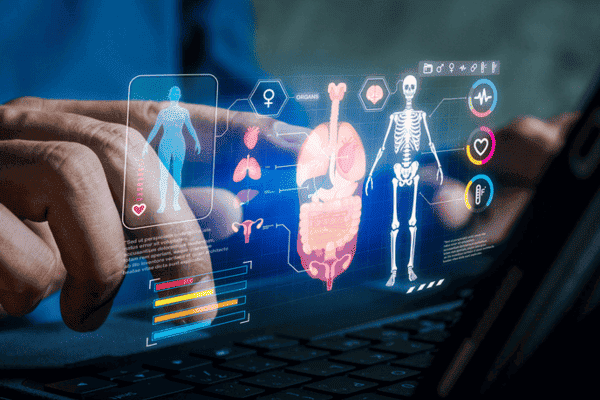
2. Precision Medical and Healthcare
Sensor technology is transforming healthcare from traditional diagnosis to data-driven precision medicine.
Medical sensors continuously monitor vital signs such as temperature, heart rate, blood oxygen, and ECG signals. Wearable devices further extend monitoring from hospitals to daily life.
Main applications include:
Real-time patient health monitoring
Intelligent drug delivery systems with dosage control
Wearable health devices for chronic disease management
This shift enables earlier diagnosis, personalized treatment, and improved healthcare accessibility.
3. Autonomous Driving and Intelligent Transportation
Autonomous driving relies on multi-sensor fusion to ensure safe and accurate environmental perception.
Common sensor types include MEMS accelerometers, radar, optical cameras, and pressure sensors. Together, they support real-time decision-making.
Key functions:
Lane and obstacle detection
Adaptive cruise control
Automatic parking and collision warning
Sensor integration significantly improves road safety and driving efficiency.
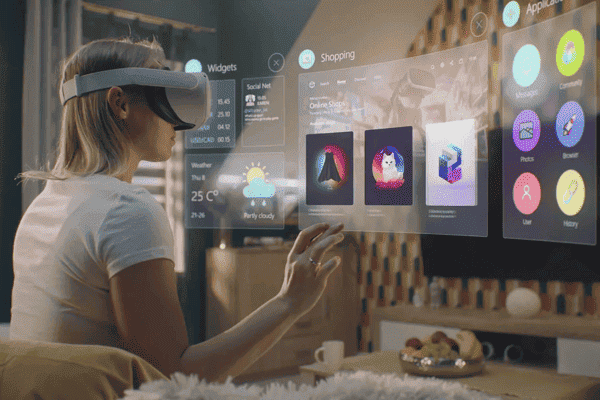
4. VR/AR Immersive Interaction
VR and AR systems depend heavily on motion sensing technology to deliver realistic experiences.
Sensors track head movements, hand gestures, and body posture in real time, ensuring accurate synchronization between physical actions and virtual environments.
This reduces motion sickness and enhances immersion in interactive applications such as gaming, training, and simulation.
5. Industrial Intelligent Manufacturing
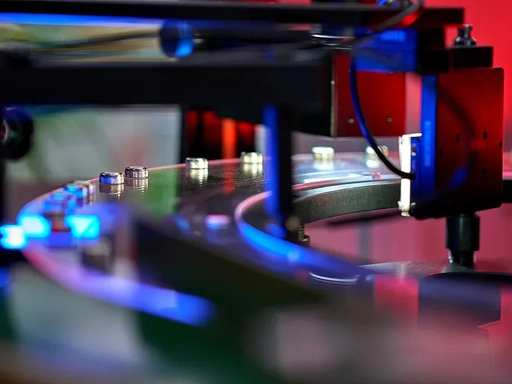
In industrial environments, sensors enable automation, precision control, and predictive maintenance.
Modern industrial systems are getting more compact and tightly integrated, which puts higher demands on hardware design. In real-world applications, especially where space is limited or vibration is a factor, flexible interconnect structures are often used to improve durability and keep system integration stable.
In these kinds of designs, flexible circuit technology is commonly used to ensure stable signal transmission while also providing the mechanical flexibility required for modern industrial systems.
| Function | Role | Benefit |
|---|---|---|
| Equipment Monitoring | Detect vibration and temperature | Prevent failures |
| Production Control | Monitor process parameters | Improve automation |
| Quality Inspection | Detect defects | Increase yield |
Core Future Development Trends of Sensor Technology
Sensor technology is evolving beyond simple data acquisition toward intelligent perception systems.
Sensor technology isn't just getting smaller or cheaper. The direction it's heading is shaped by a mix of factors, from AI adoption to an aging population to sustainability targets, and each one is pushing sensors to take on a bigger role inside the systems they belong to.
1. AI Moves Onto the Sensor
Processing used to happen after data left the sensor. That's changing. More sensors now carry embedded AI chips and edge computing capabilities, so raw signals get interpreted right where they're captured. In autonomous vehicles, this is how lidar data turns into a usable 3D map of the surroundings in real time. In-cabin sensors follow the same logic, reading driver behavior locally and adjusting climate or alerts without waiting on a cloud round trip. The result is lower latency and less dependence on constant connectivity, which matters a lot in safety-critical applications.
2. Sensors Take On Safety-Critical Roles in Automation
As automation spreads through automotive and manufacturing, sensors are being asked to do more than report a reading. They're expected to provide redundancy that protects people. Radar, lidar, and thermal imaging sensors back each other up in ADAS systems, so no single point of failure compromises safety. On factory floors, force and torque sensors give collaborative robots the ability to sense a person nearby and stop before contact happens. This shift, from measuring conditions to actively protecting outcomes, is one of the clearest signs that sensors are functioning as system components, not standalone parts.
3. Continuous Health Monitoring Becomes the Norm
An aging population is pushing sensor design toward long-term, low-friction health tracking. Wearable sensors already monitor heart rate, blood oxygen, and sleep patterns around the clock, and biosensors are extending that capability into point-of-care testing outside traditional clinical settings. The trend here isn't a single breakthrough sensor. It's the steady move of monitoring from occasional hospital visits to something that runs quietly in the background of daily life.
4. Power Budgets Shrink as Sustainability Demands Grow
Energy efficiency has become a design constraint, not an afterthought. Printed and flexible sensors are being used to track battery health and manage thermal conditions in EVs, directly extending battery life. Environmental gas sensors are doing similar work at a larger scale, monitoring air quality to support building efficiency and emissions tracking. For sensors deployed in remote or hard-to-reach locations, low-power modes and energy harvesting are what make long-term operation realistic without constant battery replacement.
5. New Materials Are Expanding What Sensors Can Do
Sensor capability is also advancing on the materials side. Flexible substrates like PDMS, PET, and polyimide allow sensors to be shaped around curved or moving surfaces, opening up applications that rigid sensors couldn't handle. In imaging, quantum dots are pushing sensors beyond the visible spectrum into near-infrared and short-wave infrared ranges, with tunable optical properties that improve performance across different lighting conditions. As material science keeps advancing, it's often what unlocks the next generation of sensor form factors rather than sensor logic alone.
Conclusion
The next few years won't be defined by sensors getting smarter in isolation, but by how well they fit into the systems around them. On-device AI, tighter power budgets, and new flexible materials are already pushing sensors toward that system-level role, but the real test is interoperability: whether a sensor built for one application can reliably feed data into increasingly complex, multi-sensor environments without becoming a weak link. Security is the other piece often overlooked until it causes a problem, especially as more sensors operate autonomously and make decisions in real time. Get those two things right, and sensors stop being a component teams select late in the design process. They become the layer that determines whether an intelligent system actually works as intended.
FAQ
1. What is the main role of sensors in IoT systems?
Sensors collect real-time data from the environment and provide the foundation for intelligent decision-making in IoT systems.
2. Why is sensor fusion important in autonomous driving?
Sensor fusion combines multiple data sources to improve accuracy, reliability, and safety in complex driving environments.
3. What is MEMS sensor technology?
MEMS (Micro-Electro-Mechanical Systems) technology enables the creation of small, integrated sensors with high precision and low power consumption.
4. How do sensors improve healthcare?
Sensors enable continuous monitoring of vital signs, allowing early detection of health issues and personalized treatment.
5. What is the biggest future trend in sensor technology?
The biggest trend is the integration of AI, allowing sensors to process data locally and make real-time decisions.