日本語
日本語
 한국어
한국어

PCB Quality Inspection Process | PCBgogo Quality Control
A PCB can look flawless and still contain hidden defects that lead to unstable performance or complete failure. Because these problems can arise from incoming materials, solder paste printing, component placement or hidden solder joints, effective PCB quality inspection cannot rely on a single final check.
At PCBgogo, quality control runs throughout manufacturing and assembly. From IQC and IPQC to SPI, AOI, X-Ray, visual QC and functional testing, each inspection stage targets specific risks before delivery. Next, let's explore the key aspects of PCB quality inspection and how PCBgogo’s inspection process ensures PCB quality and reliability at every stage.
Why PCB Inspection Must Cover the Entire Production Process
Modern circuit boards combine fine-pitch components, dense layouts, polarized devices and packages with hidden solder connections. No single inspection method can evaluate all of these features.
Visual inspection is useful for visible workmanship defects, but it cannot examine solder joints beneath BGA or QFN packages. AOI can inspect component placement and visible soldering conditions efficiently, but optical equipment cannot see through a component body. Functional testing confirms whether an assembled board operates as required, but discovering a basic assembly mistake at the final stage may already mean unnecessary rework.
The most reliable approach is therefore layered inspection:
Prevent unsuitable materials from entering production.
Monitor quality while manufacturing is in progress.
Verify solder paste before components are soldered.
Inspect component placement and visible solder joints.
Examine hidden connections where optical methods cannot reach.
Test the finished board against its intended operation.
PCBgogo PCB Quality Inspection Process at a Glance
| Inspection stage | What PCBgogo checks | Why it matters |
|---|---|---|
| IQC | Incoming materials and components | Prevents incoming quality problems from entering production |
| IPQC | Production conditions and first-article LCR results | Identifies process or component-value issues before they affect the full run |
| SPI | Solder paste deposition after printing | Detects printing problems before placement and reflow |
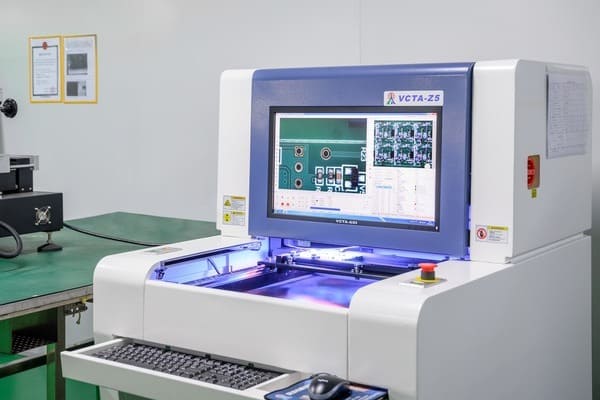
| AOI | Visible soldering, missing parts and component polarity | Provides fast and consistent inspection of assembled boards |
| X-Ray | Hidden pads and solder joints under BGA, QFN and similar packages | Finds defects that optical inspection cannot see |
| Visual QC | General workmanship and visible quality conditions | Adds experienced human evaluation to automated inspection |
| Functional testing | Customer-defined functions and performance | Confirms that the completed PCBA operates according to requirements |
The exact inspection flow may be adjusted to suit the design and assembly process, but the objective remains the same: detect problems as early as possible and verify quality again before delivery.
IQC: Quality Control Before Production Begins
High-quality production starts with controlling what enters the production line.
PCBgogo conducts Incoming Quality Control, or IQC, before manufacturing and assembly proceed. Incoming materials and components are checked so that quality problems can be identified before they become embedded in finished products.
This first checkpoint is important because even a well-controlled assembly process cannot compensate for unsuitable or incorrect incoming items. A problem introduced at this stage may later appear as poor solderability, incorrect component installation, unstable electrical behavior, or reduced product reliability.
By placing quality control at the entrance to production, PCBgogo reduces the likelihood of preventable defects moving downstream. It also avoids adding labor and production value to materials or parts that should not have entered the process.
For customers, IQC provides the foundation for consistent PCB and PCBA quality.
IPQC: Controlling Quality While Production Is Running
Some suppliers focus primarily on checking completed boards. PCBgogo also monitors quality during production through In-Process Quality Control, or IPQC.
IPQC allows the production team to identify abnormalities while manufacturing and assembly are still in progress. Instead of waiting until the end of a batch, potential process deviations can be detected earlier and addressed before they affect more boards.
This approach offers two important benefits:
It reduces the risk of repeating the same defect across an entire production run.
It makes corrective action faster and more targeted.
In-process inspection is especially valuable when moving from a prototype or first unit into batch production. The earlier a deviation is found, the lower the potential impact on schedule, cost, and yield.
First-Article LCR Testing
As part of in-process quality assurance, PCBgogo conducts first-article LCR testing.
LCR testing measures electrical properties associated with inductance, capacitance, and resistance. It helps verify relevant component values on the first assembled article before production continues at scale.
This checkpoint can identify incorrect component values or related assembly errors early in the process. If a discrepancy is found on the first article, it can be investigated before the same issue is reproduced throughout the batch.
SPI: Inspecting Solder Paste Before Reflow
Solder paste printing is one of the most critical stages in surface-mount assembly. Too much, too little or incorrectly positioned solder paste can affect the quality of the final solder joint.
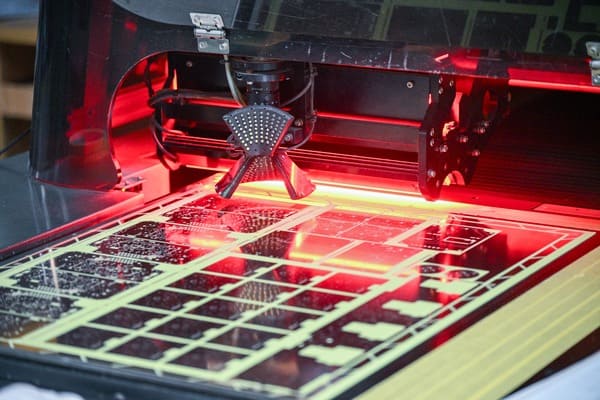
PCBgogo uses Solder Paste Inspection, or SPI, to inspect solder paste after printing. This automated optical inspection step checks the paste application before the process advances to placement and reflow.
SPI helps identify conditions such as:
Insufficient solder paste
Excessive solder paste
Paste displacement
Irregular paste deposits
Missing solder paste on a pad
The timing of this inspection is important. Once components have been placed and the board has passed through reflow, a solder paste problem may already have developed into bridging, an open connection, or an unreliable joint.
By inspecting solder paste early, PCBgogo can address printing-related issues closer to their source. This supports better process control and reduces avoidable downstream rework.
AOI: Checking Components and Visible Soldering Results
After component placement and soldering, PCBgogo uses Automated Optical Inspection, or AOI, to evaluate the assembled board.
AOI provides a fast and consistent method for checking visible assembly conditions. It is particularly useful on densely populated boards where manually inspecting every component and solder joint would be difficult and subject to human variation.
PCBgogo uses AOI to check areas including:
Visible soldering quality
Missing components
Incorrect component placement
Component polarity
Other observable assembly inconsistencies
Polarity inspection is particularly important for diodes, electrolytic capacitors, ICs, and other directional components. A component may be the correct part and appear securely soldered, but the board may still fail if that component is installed in the wrong orientation.
AOI strengthens PCB inspection by comparing assemblies systematically rather than depending exclusively on the human eye. It is well suited to visible defects, but optical inspection has a physical limitation: it cannot examine a joint hidden beneath a component package. That is why PCBgogo complements AOI with X-Ray inspection where necessary.
X-Ray Inspection: Seeing Beneath BGA and QFN Packages
BGA, QFN, and other advanced component packages create an important inspection challenge. Their pads and solder joints are located underneath the component body and cannot be fully examined using ordinary visual inspection or AOI.
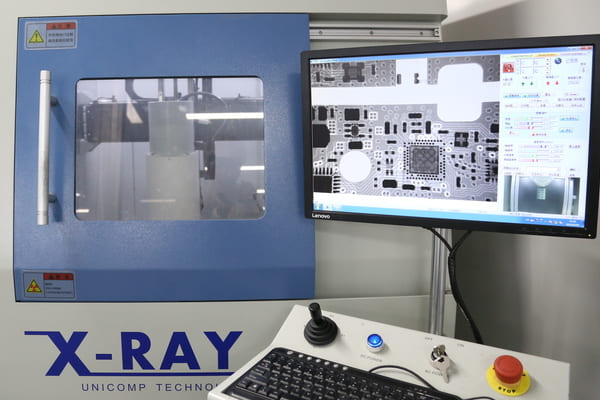
PCBgogo uses X-Ray inspection to examine these hidden areas.
X-rays pass through the component and produce an image of the internal soldering structure. This makes it possible to evaluate connections that are inaccessible to surface-based inspection methods.
X-Ray inspection is especially useful for identifying potential issues involving:
Hidden BGA solder joints
QFN pads
Solder voids
Bridging beneath a package
Insufficient or irregular hidden solder connections
Package alignment conditions
This capability is increasingly important for compact, high-density, and precision electronic products. Without X-Ray inspection, a board can pass an external visual check while still containing a hidden solder defect.
By applying X-Ray inspection to packages with concealed pads, PCBgogo closes one of the most important gaps in conventional PCB assembly inspection.
Visual QC: Experienced Human Inspection Still Matters
Automated inspection provides speed, consistency, and the ability to detect small production differences. However, automation does not eliminate the value of experienced human judgment.
PCBgogo performs visual QC as part of its regular quality inspection process. Inspectors examine the board for visible workmanship and general quality conditions that require contextual evaluation.
Depending on the board, visual QC can help identify issues such as:
Visible contamination or residue
Damaged components or board surfaces
Poor general workmanship
Connector or component abnormalities
Obvious soldering defects
Conditions requiring further inspection
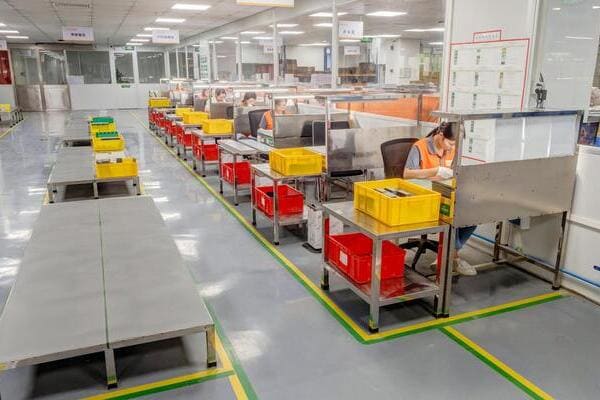
Visual QC and automated inspection are complementary. SPI evaluates solder paste before reflow, AOI checks visible assembly details systematically, and X-Ray examines concealed joints. Visual inspection provides an additional quality gate and helps confirm the overall condition of the product.
This layered approach is more dependable than treating any single technology as a complete solution.
Functional Testing: Verifying That the PCBA Actually Works
A board can have the correct components and visually acceptable solder joints but still fail to perform its intended function. That is why physical inspection alone is not the final measure of PCBA quality.
PCBgogo can conduct functional testing according to the customer's testing program, procedures, and acceptance requirements.
During this stage, the completed assembly is tested for the functions and performance specified by the customer. The purpose is to verify that the PCBA behaves as required in its intended operating context.
Customer-provided test information may include:
Testing procedures
Required test sequence
Input and output conditions
Expected results
Performance requirements
Pass/fail criteria
Required fixtures or programming information
Functional testing creates the final connection between manufacturing quality and real product performance. It answers the question that matters most: does the assembled board work as the customer expects?
Providing complete and clear test instructions allows PCBgogo to execute this stage more effectively.
What PCBgogo's Quality Process Means for Your Project
Lower risk of batch-wide defects
First-article testing and in-process inspection can reveal issues before they are repeated across a larger production run.
Better control of soldering quality
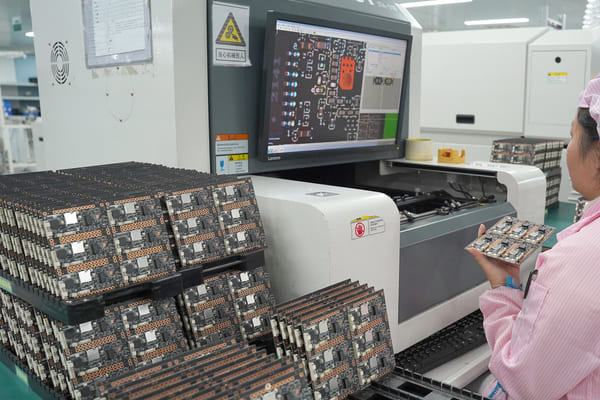
SPI, AOI and X-Ray inspect soldering at different stages and from different perspectives, covering both visible and hidden connections.
Greater confidence in complex assemblies
X-Ray inspection provides an essential quality check for BGA, QFN and other packages with concealed pads.
Less unnecessary rework
Detecting a solder paste problem before reflow is more efficient than discovering it after assembly. The same principle applies throughout the production process.
Verification based on your requirements
Functional testing follows the customer's testing program and procedures, helping ensure that the delivered boards meet project-specific performance expectations.
Choose PCB Manufacturing Backed by Layered Quality Inspection
Quality is not created by one final inspection. It is built through a series of controlled decisions and verification steps from incoming materials to completed product performance.
PCBgogo combines IQC, IPQC, first-article LCR testing, SPI, AOI, X-Ray inspection, visual QC, and customer-defined functional testing to provide quality control throughout PCB manufacturing and assembly.
Whether your project involves a straightforward prototype or a dense PCBA with BGA and QFN packages, PCBgogo applies the appropriate inspection methods to find visible, hidden, and functional defects before delivery.
Ready to start your next PCB or PCBA project? Submit your files and testing requirements to PCBgogo for a quotation.
Frequently Asked Questions About PCB Quality Inspection
What is PCB quality inspection?
PCB quality inspection is the process of checking circuit boards and assembled PCBAs for material, manufacturing, component-placement, soldering, and functional defects. Effective inspection takes place at multiple production stages rather than only after assembly is complete.
What is the difference between SPI and AOI?
SPI examines solder paste after printing and before soldering. AOI is generally used later to inspect visible component placement, polarity, and soldering conditions. Together, they help detect defects before and after reflow.
Can AOI inspect BGA solder joints?
AOI cannot fully inspect solder joints hidden beneath a BGA package because it relies on optical visibility. PCBgogo uses X-Ray inspection for BGA, QFN, and other components with concealed pads.
Why does PCBgogo perform first-article LCR testing?
First-article LCR testing helps verify relevant resistance, capacitance, and inductance values before the full production run proceeds. It can identify incorrect component values early and reduce the risk of repeating the problem across a batch.
Can PCBgogo perform functional testing?
Yes. PCBgogo can perform functional and performance testing according to the customer's test program, procedures, and acceptance criteria. Customers should provide complete test instructions and any required supporting resources.