日本語
日本語
 한국어
한국어

6061 Aluminum vs 7075 Aluminum: What are the Differences?
QUICK ANSWER
6061 is usually the better all-purpose choice because it welds readily, resists corrosion well, conducts heat efficiently, and costs less. Choose 7075 when the part needs substantially higher yield and tensile strength without a major weight increase. Always compare the same temper and product form because those details change the published properties.
Choosing between 6061 and 7075 aluminum can be harder than it looks. Should you use the more affordable alloy that is easy to weld, or choose the stronger option for a high-load part? This decision affects CNC machined housings, aircraft fittings, bicycle components, machine fixtures, and many other products.
Both alloys are lightweight, strong, and easy to machine. However, they behave differently under load, during welding, and in corrosive environments. This 6061 aluminum vs 7075 aluminum comparison explains their key differences and helps you choose the right material for your application.
What Is 6061 Aluminum?
6061 aluminum is a heat-treatable alloy made mainly with magnesium and silicon. It offers good strength, corrosion resistance, and a clean finish. It is also easy to machine, weld, and form. Common uses include frames, brackets, housings, fixtures, and general mechanical parts.
What Is 7075 Aluminum?
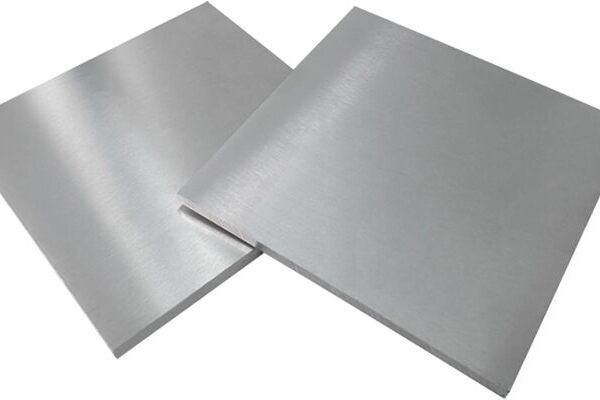
7075 aluminum is a heat-treatable alloy made mainly with zinc, magnesium, and copper. It is much stronger and harder than 6061 and also performs well under repeated loads. However, it costs more, has lower corrosion resistance, and is difficult to weld. It is often used in aircraft parts, high load structures, sports equipment, molds, and tooling.
What Is the Main Difference Between 6061 and 7075 Aluminum?
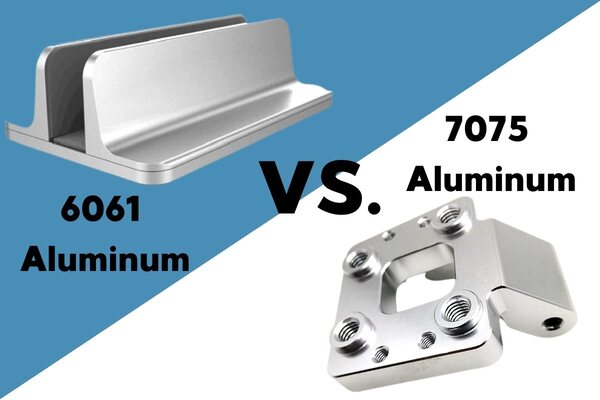
The main difference is that 6061 prioritizes balanced fabrication and corrosion performance, while 7075 prioritizes high mechanical strength. Alloy 6061 belongs to the magnesium- and silicon-based 6xxx series. Alloy 7075 is a zinc, magnesium, and copper alloy in the 7xxx series.
These are representative published values, not universal design allowables. The 6061 figures are Hydro minimums for T6 or T6511 extrusions. The 7075 figures are thyssenkrupp data for T6 and T651 sheet, coil, and plate. Product form, thickness, direction, and specification can change the minimums.
| Property or factor | 6061 T6 or T6511 | 7075 T6 or T651 |
|---|---|---|
| Ultimate tensile strength | 260 MPa minimum | 483 MPa |
| Yield strength | 240 MPa minimum | 414 MPa |
| Elastic modulus | About 69 GPa | 73.1 GPa |
| Density | 2.71 g/cm3 | 2.80 g/cm3 |
| Thermal conductivity | 167 W/m K | 130 W/m K |
| General corrosion behavior | Excellent in Hydro data | Poor rating in thyssenkrupp data |
| Welding | Readily welded by commercial methods | Arc welding rated poor |
| Typical cost and availability | Lower and widely available | Higher and less broadly stocked |
How Do 6061 and 7075 Compare in Performance and Processing?
The main advantage of 7075 aluminum is its high strength. However, strength is only one factor to consider. If you need better weldability, corrosion resistance, heat transfer, or easier processing, 6061 is often the better choice. The following comparison covers mechanical properties, manufacturing characteristics, and overall cost.
Mechanical Performance
Strength: Published data lists a yield strength of about 414 MPa for 7075 and at least 240 MPa for 6061 in the compared tempers. This means 7075 can handle higher loads before permanent deformation begins.
Bending resistance: 7075 can withstand greater bending stress before it takes a permanent bend. This makes it useful for compact brackets, aircraft fittings, and other highly loaded parts.
Stiffness and elasticity: 6061 has an elastic modulus near 69 GPa. The value for 7075 is about 73.1 GPa. The difference is small. A 7075 part may be stronger, but it will not be much stiffer if its shape and size remain the same.
Thermal conductivity: 6061 conducts heat better. Its typical thermal conductivity is about 167 W/m K, compared with 130 W/m K for 7075. This gives 6061 an advantage in heat sinks, electronics housings, and cooling fixtures.
Temperature performance: The melting range of 6061 is about 582°C to 652°C. For 7075, it is about 532°C to 635°C. These figures are not safe working temperatures. Both alloys can lose strength well before melting, so high-temperature parts need separate engineering data.
Machinability and Finishing
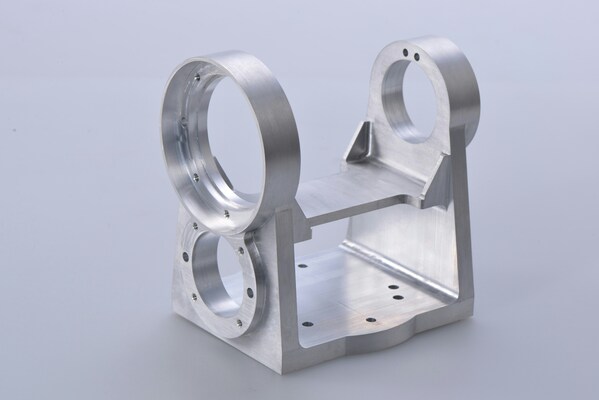
CNC machining: Both alloys can be machined. 6061 is common for general CNC parts because it is affordable and widely available. 7075 is harder, but it can produce strong and precise machined parts.
Anodizing: 6061 responds well to clear, colored, and hardcoat anodizing. 7075 can also be anodized, but its finish may appear darker or less even. A sample finish is useful when appearance matters.
Welding: 6061 can be welded using common commercial methods. Welding can reduce strength around the heat-affected zone. Conventional fusion welding is generally avoided with 7075 because cracking may occur.
Corrosion resistance: 6061 has excellent resistance to normal atmospheric conditions and good resistance to seawater. 7075 needs more protection in wet or salty environments. Coatings, anodizing, sealants, or regular inspection may be required.
Other Practical Differences
Weight: The density of 6061 is about 2.71 g/cm3. The density of 7075 is about 2.80 g/cm3. The weight difference is small.
Cost: 6061 is usually less expensive and easier to source. 7075 costs more because of its alloy content, processing requirements, and more limited availability.
Temper: Always check the full material designation. T6, T651, and T6511 do not describe exactly the same processing condition. Temper and product form can affect strength, stability, and machining results.
How Do Machining, Welding, and Forming Compare?
6061 is the more forgiving fabrication alloy, while 7075 is best treated as a high-strength machining material.
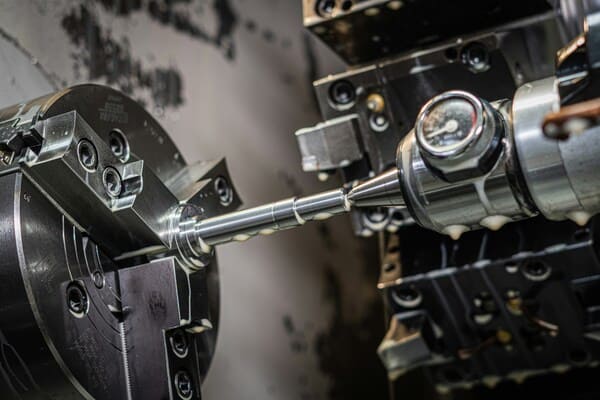
CNC machining: Both cut well in appropriate tempers, but 7075 can increase stock and tooling costs.
Welding: Hydro states that 6061 welds readily but warns that T6 strength can fall in the weld region. Check the heat-affected zone, not only parent metal values.
Forming: 6061 is easier to form. Hydro recommends softer conditions such as T4 or O for severe bends.
Joining 7075: Fusion welding is normally avoided because of cracking and property loss. Fasteners, adhesives, or a redesigned joint are safer starting points.
Anodizing: Both alloys can be anodized, but chemistry affects color. Approve cosmetic samples from the actual alloy and temper.
Fabrication needs can therefore eliminate 7075 even when its strength looks attractive on a data sheet.
When Should You Choose 6061 Aluminum?
Choose 6061 when fabrication, corrosion resistance, thermal conductivity, availability, and cost matter more than maximum strength.
Welded frames and brackets: 6061 supports welded construction when reduced properties near the weld are considered.
Housings and heat sinks: Higher thermal conductivity and good anodizing response suit electronics enclosures.
Marine and outdoor hardware: Good general corrosion resistance provides a sound baseline when galvanic couples are controlled.
Fixtures and machine components: Wide availability, machinability, and moderate strength keep processing flexible.
When geometry can carry the load, 6061 often delivers the lower risk path.
When Should You Choose 7075 Aluminum?
Choose 7075 when high strength in a compact part outweighs welding, corrosion, and cost disadvantages.
Aerospace fittings: High strength and fatigue performance support highly loaded aircraft applications.
Compact structural hardware: High yield strength helps when envelope limits prevent a larger cross section.
Performance equipment: Bicycle, climbing, and motorsport parts may benefit when load and weight targets are tightly controlled.
Molds and tooling: Hardness, machinability, and polishability suit selected tooling applications.
If stiffness, weldability, thermal transfer, or corrosion governs the design, 6061 may perform better.
Why Do Temper and Product Form Matter?
Temper and product form matter because processing history changes specified properties. T6 indicates solution heat treatment followed by artificial aging. Additional digits identify steps such as stress relief by stretching.
The Aluminum Association states that each temper designation represents unique processing and minimum properties. It distinguishes T651 from T6511 and warns against treating the difference as insignificant.
T651 is common for machined plate because stress relief can improve dimensional stability as stock is removed. Extruded bar and profiles may use T6511. Follow the drawing, material standard, stock form, and analysis rather than making a casual substitution.
What Should a Material Purchase Specification Include?
A material purchase specification should identify what must be supplied and how compliance will be verified. An alloy number alone is incomplete.
Alloy and temper: State 6061 T651, 6061 T6511, 7075 T651, or the exact approved condition.
Product form and size: Identify plate, sheet, bar, extrusion, tube, or forging plus the size range.
Governing specification: Reference the required ASTM, AMS, ASME, or customer standard and its current approved revision.
Material test report: Request chemistry, mechanical results, lot identity, and traceability when required.
Direction: Define orientation when fatigue, fracture, or distortion is direction sensitive.
Finish: Specify anodizing, coating, masking, sealing, and cosmetic acceptance criteria.
Substitution control: Require approval before changing alloy, temper, product form, or specification.
This turns an alloy preference into an auditable requirement.
How PCBgogo Supports CNC Aluminum Parts
Choosing between 6061 and 7075 is easier when you have the right manufacturing team behind you. PCBgogo understands that material choice affects strength, weight, finish, cost, and long-term performance. Its engineering team can review your application and help you select a suitable material for your design.
PCBgogo supports a broad range of production materials and provides CNC machining for rapid prototypes and custom parts. Whether you are developing an aluminum housing, mounting bracket, fixture, or structural component, its manufacturing experience can help you solve practical issues before they reach production.
Submit your CAD files and project requirements to request a quote. PCBgogo will review the design and help turn your early prototype into a production-ready component.
Frequently Asked Questions About Aluminum 6061 vs 7075
Is 7075 aluminum stronger than 6061 aluminum?
Yes. In comparable peak-aged conditions, 7075 has substantially higher yield and tensile strength than 6061. The exact advantage depends on temper, product form, thickness, and specification.
Is 7075 aluminum heavier than 6061 aluminum?
Yes, but only slightly by volume. The cited densities are about 2.80 g/cm3 for 7075 and 2.71 g/cm3 for 6061, a difference of roughly 3 percent.
Can 7075 aluminum be welded?
7075 can be joined by specialized processes in limited situations, but conventional fusion welding is generally avoided because of cracking and property degradation risks. A mechanically fastened, bonded, or redesigned joint is usually a better starting point.
Which alloy is better for CNC machining?
Both alloys machine well when the process suits the temper and geometry. Choose 6061 for economical general-purpose parts and 7075 when higher strength or hardness justifies the stock and processing cost.
Which alloy is better for anodizing?
6061 usually provides a more predictable decorative anodized appearance. 7075 can be anodized for protection, but its copper and zinc content can produce less uniform color, so cosmetic samples should be approved before production.
Can 7075 replace 6061 without redesigning the part?
Not automatically. A substitution requires review of stiffness, corrosion, joining, finish, fatigue, product form, temper, and the governing material specification, not just tensile strength.