日本語
日本語
 한국어
한국어

Anodized Aluminum Colors: A Practical Selection Guide
QUICK ANSWER Anodized aluminum colors include clear silver, black, gray, bronze, gold, blue, red, green, and custom shades. Results depend on alloy, surface preparation, oxide thickness, coloring method, sealing, geometry, and lighting. For repeatable production, approve physical samples and define an acceptable color range.
Why do a camera housing, bicycle component, or laptop body keep its rich metallic finish without looking painted? The answer is often colored anodizing. This electrochemical process transforms the aluminum surface into a durable oxide layer that can absorb color while improving resistance to corrosion and everyday wear. The result is a finish that combines visual appeal with practical performance.
But choosing anodized aluminum colors is not as simple as picking a shade from a chart. The same blue or black can look different depending on the alloy, surface texture, coating thickness, coloring method, part geometry, and even the lighting used during inspection. So, which colors are easiest to reproduce, and how can you avoid costly mismatches? This guide explores the available color options, how they are created, why variations occur, and how to specify a reliable anodized finish for production.
What Is Anodized Aluminum?
Anodized aluminum is aluminum whose natural oxide surface has been deliberately thickened through an electrochemical process. Unlike paint or plating, the anodic oxide is formed from the aluminum itself, so it becomes an integral part of the surface rather than a separate coating that can peel away.
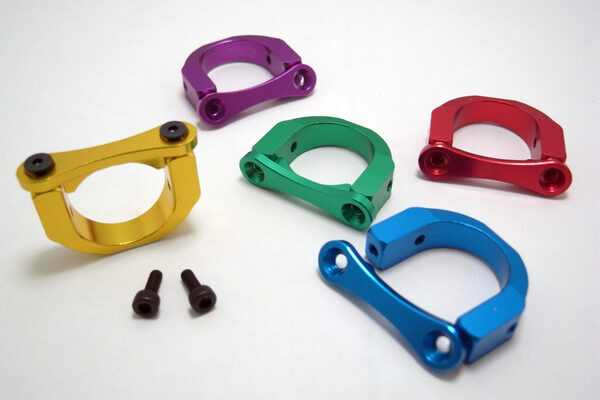
During anodizing, the aluminum component is immersed in an electrolytic bath and connected as the anode in an electrical circuit. The resulting reaction creates a controlled aluminum oxide layer containing microscopic pores. These pores can absorb dyes or receive other coloring treatments, which is how manufacturers produce different anodized aluminum colors. A final sealing step closes the pores, locks in the color, and improves corrosion resistance.
Before treatment, machined aluminum normally has a silver gray appearance. Polishing creates a brighter, more reflective surface, while brushing, bead blasting, and chemical etching produce different textures. Because the anodic layer remains partly transparent, these underlying finishes continue to influence the final color and gloss.
What Are the Main Types of Anodizing?
The anodizing method determines the coating properties, available colors, and intended application:
Type I anodizing: This process uses chromic acid to create a relatively thin protective layer. It is commonly associated with corrosion-resistant aerospace components but is less suitable when a broad decorative color range is the main requirement.
Type II anodizing: This widely used sulfuric acid process creates a porous oxide layer that accepts dyes effectively. It is the standard choice for decorative finishes such as black, blue, red, green, gold, and many custom shades.
Type III anodizing: Also called hard anodizing, this process produces a thicker, harder surface designed primarily for wear resistance. Its natural tone is often darker, which can make bright or tightly controlled decorative colors more difficult to achieve.
The Aluminum Anodizers Council recommends specifying the alloy, temper, mechanical finish, chemical preparation, and anodic oxide type because each factor can change the finished appearance.
Anodized aluminum colors chart for practical selection
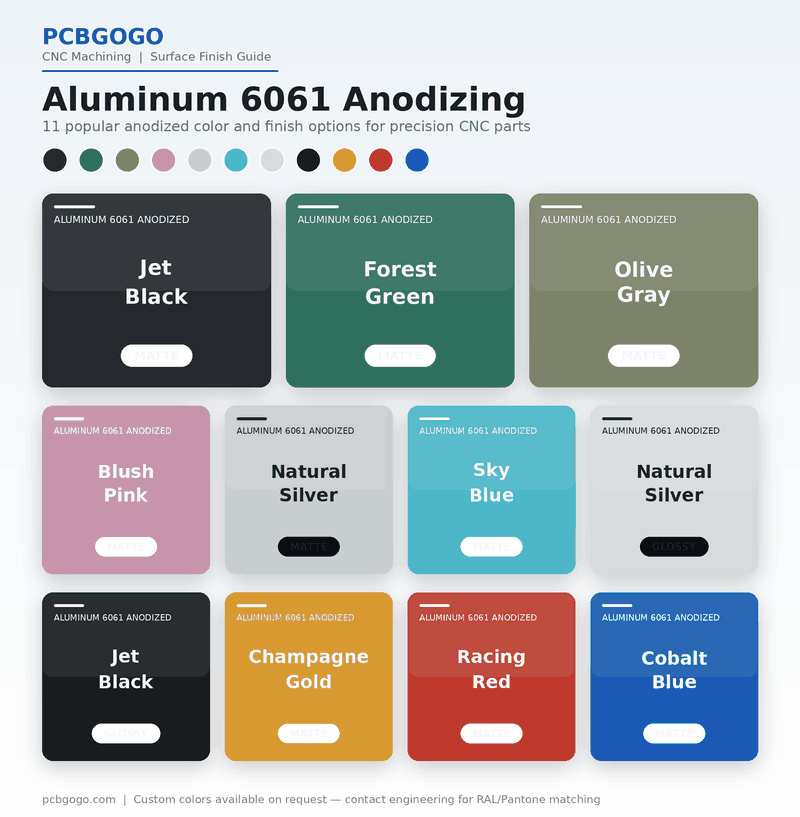
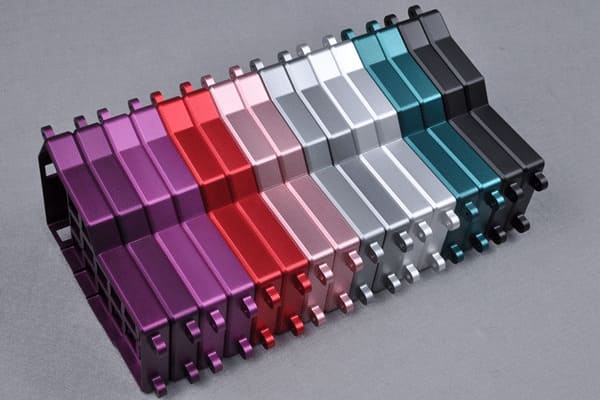
The most useful anodized aluminum colors chart compares visual effect with production behavior, not just hue. Availability varies by supplier, alloy, part size, and the coloring route, so treat this chart as a selection guide and confirm the final choice on representative samples.
| Color family | Typical appearance | Relative repeatability | Common uses |
|---|---|---|---|
| Clear or silver | No added dye; metallic base remains visible | High | Machine parts, trim, housings |
| Black | Deep neutral tone that hides small shade movement | High | Optics, electronics, industrial parts |
| Gray or bronze | Muted metallic range, often electrolytic | High to medium | Architecture, controls, premium hardware |
| Blue | Bright dyed color; shade can move toward violet | Medium | Consumer products, sports equipment |
| Red | Strong dyed color; fade and bath control matter | Medium | Controls, accents, branded hardware |
| Green | Dyed decorative color with supplier-specific range | Medium | Outdoor gear, consumer components |
| Gold | May come from dye or inorganic coloring | Medium | Decorative parts, instruments, trim |
| Light or custom | Pale or tightly matched target shade | Lower | Brand critical cosmetic assemblies |
How Are Anodized Aluminum Colors Created?
Anodized aluminum colors are created through a controlled sequence of surface preparation, oxide formation, coloring, sealing, and inspection. Each stage influences the final shade, texture, durability, and consistency, so color anodizing is more than simply placing a finished part in dye.
Step 1: Prepare the Aluminum Surface
The final appearance begins before anodizing. Oils, machining residue, dirt, and natural oxide must be removed so the surface reacts evenly during treatment.
Depending on the desired look, the part may also be polished, brushed, bead blasted, or chemically etched. These treatments change how the aluminum reflects light:
Polishing produces a brighter, more reflective appearance.
Brushing creates a directional grain.
Bead blasting gives the surface a soft, matte texture.
Chemical etching helps create a more uniform satin finish.
Because the anodic layer follows the existing surface, scratches, tool marks, and inconsistent textures may remain visible after coloring.
Step 2: Form the Porous Oxide Layer
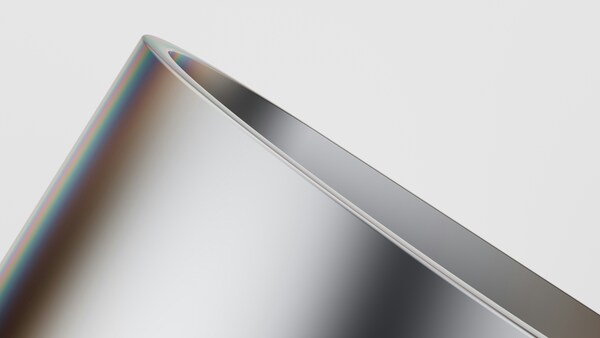
The prepared aluminum is immersed in an electrolyte bath and connected as the anode in an electrical circuit. Applying direct current converts the surface into a controlled aluminum oxide layer.
This layer contains microscopic pores that can receive dyes or metallic deposits. Its thickness, pore structure, and uniformity influence how much color the surface accepts and how dark the finished shade becomes.
Type II sulfuric acid anodizing is commonly used for decorative colors because its porous structure accepts dyes effectively. Type III hard anodizing creates a thicker, more wear-resistant layer, but its naturally darker appearance can make bright colors less predictable.
Step 3: Add the Color
After the porous oxide layer has formed, the manufacturer selects a coloring method based on the required shade, durability, environment, and production consistency.
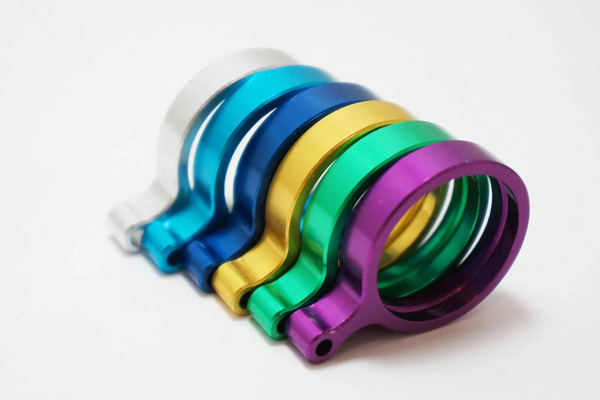
Dye Coloring
Dye coloring immerses the anodized part in an organic or inorganic dye bath. The open pores absorb the dye before the surface is sealed.
This method offers:
A broad selection of colors
Bright and saturated shades
Light, medium, and dark color options
Greater flexibility for decorative products
Common dyed colors include black, blue, red, green, gold, and brown. The final shade depends on the alloy, oxide thickness, dye formulation, bath temperature, immersion time, and sealing process.
Electrolytic Coloring
Electrolytic coloring deposits metallic salts near the bottom of the anodic pores. Tin, cobalt, and nickel are commonly used to produce champagne, bronze, gray, and black tones.
This method generally provides:
Strong resistance to ultraviolet exposure
Good outdoor color stability
Reliable dark and muted tones
Better long-term color retention
Electrolytic coloring is widely used for architectural components and exterior aluminum products where durability is more important than a large color range.
Integral Coloring
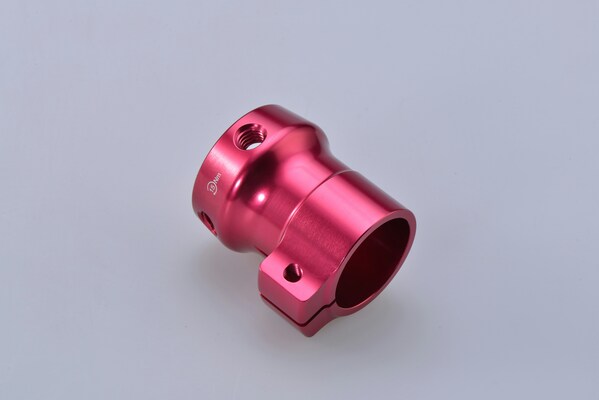
Integral coloring develops the color while the anodic oxide layer is being formed. The color becomes part of the anodizing process rather than being added through a separate dye bath.
Integral coloring can produce durable bronze, gray, brown, and black finishes. However, it offers fewer color choices and may cost more than conventional dye or electrolytic coloring.
Interference Coloring
Interference coloring modifies the pore structure and then deposits a small amount of metal inside it. The resulting color comes from the way light interacts with the modified surface.
This specialized method can create blue, green, yellow, gray, and red tones with good outdoor stability, although availability depends on the anodizing supplier.
Step 4: Seal the Anodized Surface
After coloring, the pores must be sealed to retain the color and improve corrosion resistance. Common options include hot water sealing, nickel acetate sealing, and other application-specific sealing processes.
Proper sealing improves:
Color retention
Corrosion resistance
Stain resistance
Long-term coating stability
An unsuitable or poorly controlled seal can change the shade or reduce performance, so the sealing method should match the product’s operating environment.
Step 5: Inspect the Finished Color
The anodized parts are inspected for shade, gloss, surface uniformity, coating thickness, and visible defects. Color-critical products should be compared with an approved physical sample under controlled lighting.
Why do anodized aluminum colors vary in production?
Anodized aluminum colors vary because material, surface, electrochemistry, geometry, and viewing conditions all influence appearance. A stable bath cannot correct a different alloy or texture.
Alloy and temper: Copper, silicon, magnesium, zinc, and other constituents affect oxide formation and base tone. Keep cosmetic parts in one assembly on the same alloy and temper whenever possible.
Surface preparation: Polished and machined faces reflect light directly, while blasted or etched surfaces scatter it and often look darker or more matte. Control roughness and pretreatment across every visible face.
Oxide and bath conditions: Current, temperature, thickness, dye concentration, time, and sealing change dye uptake.
Racking and geometry: Contact points, sharp edges, deep pockets, and section changes affect current flow. Place rack marks on hidden faces.
Lighting and orientation: Texture changes perceived lightness by angle. Approve samples under controlled inspection conditions.
In short, anodized aluminum colors result from the complete finishing system. Surface preparation controls texture, anodizing creates the porous oxide, the coloring method establishes the shade, and sealing protects the result.
How color affects function, cost, and production stability
Color choice affects fit, wear, conductivity, lead time, and yield because it is tied to oxide thickness and process route. Function should lead the decision.
Dimensional fit: Anodizing consumes and builds material at the surface. Threads, bearing fits, sealing lands, and mating bores may need process allowance or masking based on the specified thickness and supplier process.
Electrical contact: The dielectric oxide must be masked or removed at ground and bonding surfaces.
Hard anodizing: MIL PRF 8625 Type III prioritizes wear performance. Its darker base limits bright decorative color control.
Cost and schedule: Standard colors need less development. Custom shades can add samples, bath adjustment, controlled lots, inspection, and rework.
For nonarchitectural work, the active MIL PRF 8625 defines six coating types and two classes. Name the applicable type, class, thickness, and color requirement rather than writing anodize alone.
How should you choose an anodized aluminum color?
Choose an anodized aluminum color by ranking environment, function, repeatability, and visual intent in that order.
Start with exposure: Define indoor or outdoor service, ultraviolet light, chemicals, humidity, abrasion, cleaning, and expected life. Ask the anodizer which coloring method supports that environment.
Select for repeatability: Use clear, black, bronze, or gray when cross-batch matching is more important than a saturated accent. Keep large adjacent panels in the same controlled lot when possible.
Approve representative samples: Use the production alloy, pretreatment, color route, and seal. A flat chip cannot fully predict a machined housing.
Define an acceptance range: Agree on limit samples or an instrument tolerance linked to a master. Exact identity in every light is impractical.
Ready to Achieve Consistent Anodized Aluminum Colors?
Choosing an attractive color is only the beginning. A successful anodized finish also depends on the aluminum alloy, surface texture, anodizing type, coating thickness, masking requirements, and acceptable color variation. Defining these details early can prevent shade mismatches, dimensional problems, and costly rework.
PCBgogo provides professional CNC machining services for custom parts, helping customers turn digital designs into production-ready components. Our engineering team can review your CAD files, drawings, material requirements, and cosmetic expectations before production. From precision CNC machining and surface preparation to color sampling and anodizing coordination, we help align every stage with the appearance and performance your parts require.PCbgogo
Have an anodized aluminum project in mind? Send us your design and finishing requirements to discuss material selection, available colors, tolerances, and the most practical route from prototype to production.
Frequently asked questions about anodized aluminum colors
Can anodized aluminum fade?
Yes. Coloring method, dye, thickness, sealing, ultraviolet exposure, heat, and cleaning affect fade. Test representative samples for exterior use.
Can anodized colors match exactly?
Exact matching across every part and lighting condition is unrealistic. Controlled processing can hold an agreed range.
Which anodized aluminum colors are most consistent?
Clear, black, bronze, and gray are generally production-friendly. Repeatability still depends on alloy, texture, size, and supplier process.
Why do two batches look different?
Changes in alloy, pretreatment, thickness, bath, racking, or sealing shift color. Process adjacent cosmetic parts together when possible.
Does anodizing change dimensions?
Yes. Oxide grows into and above the original surface, so critical fits need allowance, or masking agreed before machining.
Why does the same anodized part change under different light?
Texture, gloss, angle, and illuminant change perceived color. Use controlled conditions for approval and inspection.