日本語
日本語
 한국어
한국어

Types of Sheet Metal Material: How to Choose the Right Metal for Your Part
QUICK ANSWER Cold-rolled steel is the economical all-rounder for precise indoor parts; galvanized steel adds affordable outdoor protection; stainless steel suits hygiene and aggressive environments; and aluminum is the leading choice when low weight matters. Copper, brass, titanium, and nickel alloys solve more specialized conductivity, appearance, strength-to-weight, or high-temperature problems.
Why sheet metal material selection matters
The best material for sheet metal is not simply the strongest grade or the lowest price per kilogram. A successful choice balances what the part must do, how it will be formed, where it will operate, how it should look, and what it will cost over its service life. Choosing poorly can cause cracked bends, springback, premature rust, cosmetic rejects, excess weight, difficult welding, or avoidable finishing expense.
Start with the non-negotiables: required load and stiffness, target weight, temperature, exposure to water or chemicals, electrical or thermal behavior, hygiene requirements, and expected life. Then check fabrication constraints such as bend radius, draw depth, joining method, available thickness, tolerance, grain direction, and finish. This sequence turns sheet metal material selection into a measurable engineering decision rather than a preference.
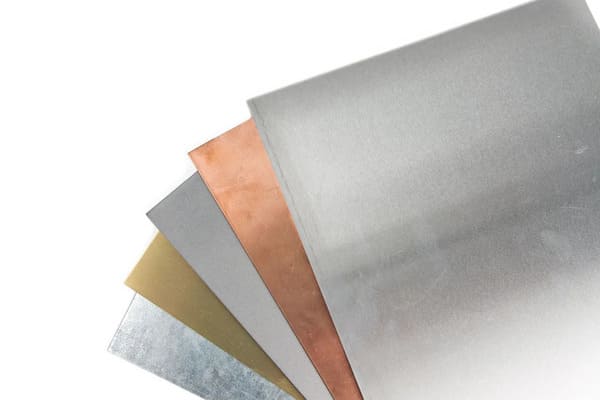
Eight common types of sheet metal material
1. Cold-rolled steel (CRS)
Cold rolling produces tight thickness control and a smooth, consistent surface. Low-carbon CRS bends, stamps, spot-welds, and paints well, so it is often the default material for sheet metal enclosures, brackets, cabinets, appliances, and indoor automotive parts. Its main weakness is corrosion: bare edges and scratches rust quickly, so specify powder coating, paint, plating, or another barrier when moisture is possible.
2. Hot-rolled steel (HRS)
HRS is rolled at elevated temperature and usually costs less than CRS in heavier gauges. It offers good structural strength and weldability, but looser dimensional control, mill scale, and a rougher surface make it less attractive for cosmetic or precision parts. It is a practical choice for frames, baseplates, guards, agricultural equipment, and heavy-duty supports where appearance is secondary.
3. Galvanized steel
Galvanized sheet combines a steel core with a sacrificial zinc coating. It delivers useful strength and better weather resistance at a modest cost, making it common in HVAC ducts, roofing, electrical boxes, fencing, and outdoor housings. Tight bends can damage the coating, and welding requires ventilation plus post-weld protection because heat destroys zinc near the joint.
4. Stainless steel
Chromium in stainless steel forms a passive oxide film that resists staining and corrosion. Grade 304 is the general-purpose choice for food equipment, appliances, architectural panels, and cleanable enclosures; 316 adds molybdenum for better resistance to chlorides and many marine or chemical conditions. Stainless is strong and attractive, but it needs more forming force, careful tooling, and heat control during welding.
5. Aluminum alloys
Aluminum is about one-third the density of steel and naturally develops a protective oxide layer. For formed sheet parts, 5052 is widely used because it bends reliably and performs well in marine environments. Heat-treatable 6061 offers higher strength but can crack on tight bends, especially in harder tempers. Typical applications include aircraft and vehicle panels, electronic enclosures, signs, heat-management components, and portable equipment.
6. Copper
Copper provides exceptional electrical and thermal conductivity, good formability, and a distinctive surface that develops a protective patina outdoors. It is valuable for busbars, terminals, heat exchangers, roofing, flashing, and decorative features. Copper is soft, relatively heavy, and expensive, so designers usually select it for functional conductivity or intentional appearance rather than general structural work.
7. Brass
Brass is a copper-zinc alloy valued for its warm gold color, corrosion resistance, machinability, and moderate formability. It is used for decorative panels, nameplates, light fixtures, instrument components, terminals, and architectural hardware. Alloy choice matters: compositions optimized for machining may not be the best for deep drawing, and the material cost is higher than common steels.
8. Titanium and nickel alloys
These premium families serve demanding environments. Titanium combines low density, high specific strength, biocompatibility, and excellent resistance to seawater, making it suitable for aerospace skins, medical hardware, and marine equipment. Nickel alloys retain strength and resist oxidation or chemicals at elevated temperatures, which suits turbines, exhaust systems, and process equipment. Both require specialized forming, cutting, joining, and a much larger budget.
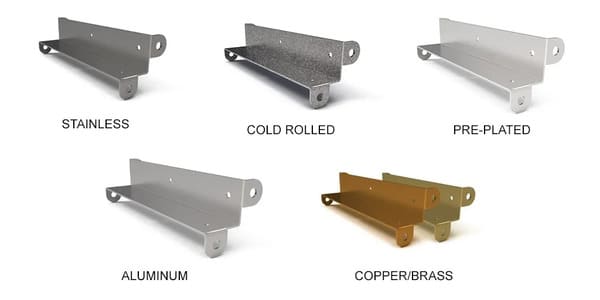
Performance comparison of common sheet metals
The ratings below are relative guides for commonly fabricated sheet grades, not substitutes for a grade-specific datasheet. Temper, thickness, heat treatment, grain direction, surface condition, and coating can change the result.
| Material | Strength / durability | Formability | Corrosion resistance | Surface finish | Best fit |
|---|---|---|---|---|---|
| Cold-rolled steel | High / medium | Excellent | Poor unless coated | Very smooth | Precise, painted indoor parts |
| Hot-rolled steel | High / high | Good | Poor unless coated | Rough; mill scale | Heavy structures and guards |
| Galvanized steel | Medium-high / good | Moderate | Good; protect cut edges | Spangled or matte | HVAC and outdoor utility parts |
| Stainless steel | High / excellent | Good; higher force | Excellent | Brushed, matte, or mirror | Hygienic and harsh environments |
| Aluminum | Medium / good | Very good by alloy | Good to excellent | Clean; easy to anodize | Lightweight panels and housings |
| Copper | Low-medium / good | Excellent | Very good; patinas | Premium, distinctive | Electrical and thermal parts |
| Brass | Medium / good | Good by alloy | Good | Decorative gold tone | Visible hardware and panels |
| Titanium / nickel | Very high / excellent | Difficult | Excellent | Specialized | Extreme service conditions |
Selection note: durability includes the material's likely behavior in service. Bare carbon steel may be strong but still have poor outdoor durability if corrosion is not controlled.
Stainless steel vs. aluminum alloy
Stainless steel and aluminum are the two most frequently compared options because both resist corrosion and can provide an attractive exposed finish. The decisive difference is usually not whether either material is "better," but whether the design values absolute strength and rugged service more than low mass and easier handling.
| Factor | Stainless steel | Aluminum alloy |
|---|---|---|
| Weight | Dense and heavy; useful when mass is not a constraint. | Roughly one-third the density of steel; ideal for mobile products. |
| Strength | Typically higher strength, stiffness, hardness, and impact resistance. | Lower absolute strength, but excellent strength-to-weight in the right alloy. |
| Corrosion | 304 is strong for general exposure; 316 is preferred around chlorides. | Naturally corrosion resistant; coatings or anodizing improve appearance and life. |
| Fabrication | Higher forming force, springback, work hardening, and welding heat control. | Easier to cut and form, but soft surfaces scratch and welding needs skill. |
| Finish | Durable brushed, satin, bead-blasted, or polished finishes. | Anodized, powder-coated, painted, brushed, or as-milled finishes. |
| Choose when | Hygiene, abuse resistance, loads, heat, or harsh chemicals dominate. | Low weight, thermal conductivity, portability, or transport efficiency dominates. |
How to choose a material for sheet metal
Define the service environment. List indoor or outdoor exposure, salt, humidity, cleaning chemicals, food contact, operating temperature, abrasion, and expected lifetime. This immediately rules out unprotected carbon steel in many environments.
Translate function into measurable properties. Specify load, stiffness, impact, fatigue, conductivity, thermal management, fire behavior, allowable deflection, and maximum part mass. Avoid vague requirements such as "strong" or "corrosion-proof."
Check manufacturability at the intended grade and temper. Confirm minimum bend radius, bend direction, hole-to-edge distance, draw ratio, springback, welding process, and finish compatibility with the fabricator. Aluminum 5052-H32 and 6061-T6, for example, behave very differently at a bend.
Compare total part cost. Include material yield, density, scrap, cycle time, tooling, welding, surface treatment, inspection, shipping, maintenance, and replacement. A higher-priced corrosion-resistant sheet can be cheaper over the product's life.
Prototype and validate. Build representative parts using production thickness, tooling, grain direction, and finishing. Test bends, joints, coatings, dimensional stability, corrosion exposure, and appearance before releasing high-volume production.
Actual applications and practical recommendations
Electronic enclosure: Use powder-coated CRS for economical indoor products, 5052 aluminum for low weight and heat spreading, or stainless steel for washdown and vandal-resistant installations.
HVAC duct or rooftop cabinet: Galvanized steel is the cost-effective baseline. Consider aluminum near the coast to reduce weight and red rust, or 316 stainless where salt, chemicals, or long life justify the premium.
Food or medical equipment: 304 stainless suits many cleanable surfaces; 316 is often chosen for chlorides or more aggressive chemicals. Verify regulations, surface roughness, weld finishing, and cleaning protocol.
Vehicle or aerospace panel: Aluminum reduces mass and can improve range or payload. Stainless is preferable for hot, highly loaded, or impact-prone zones; titanium is reserved for demanding strength-to-weight and temperature requirements.
Decorative architectural panel: Brass and copper provide living finishes that age visibly. Stainless offers a stable modern appearance, while anodized aluminum provides durable color with much lower weight.
Electrical or thermal component: Copper is the benchmark for busbars and heat transfer. Aluminum can reduce mass and cost, but its larger required cross-section, oxide layer, joining method, and galvanic compatibility must be engineered.
FAQ about sheet metal materials
What are the most common types of sheet metal material?
Cold-rolled steel, hot-rolled steel, galvanized steel, stainless steel, and aluminum are the most common general-purpose choices. Copper, brass, titanium, and nickel alloys are used when conductivity, appearance, biocompatibility, high temperature, or exceptional corrosion resistance is required.
What is the best all-purpose sheet metal?
There is no universal winner. Cold-rolled steel offers the best balance for low-cost indoor precision parts, stainless steel for durable clean or corrosive service, and aluminum for lightweight products. The "best" option is the one that meets the specification with the lowest total risk and lifecycle cost.
Which sheet metal is easiest to bend?
Low-carbon cold-rolled steel, 5052 aluminum, and annealed copper are generally formable. Exact bendability depends on grade, temper, thickness, rolling direction, inside radius, and tooling. Always validate the specific mill condition rather than relying only on the alloy family.
Which sheet metal has the best corrosion resistance?
Titanium, nickel alloys, and suitable stainless grades can provide exceptional resistance, but the environment determines the winner. For common fabrication, 316 stainless is widely used around chlorides, while aluminum and galvanized steel are cost-effective for many outdoor applications.
Is stainless steel stronger than aluminum?
At equal thickness, many stainless grades are stronger and stiffer than common sheet aluminum alloys. Aluminum is far lighter, so a thicker aluminum panel can sometimes deliver the needed stiffness at a lower total mass. Compare the complete part, not equal-gauge coupons.
How does surface finish affect material selection?
Finish changes appearance, corrosion protection, cleanability, friction, electrical contact, and cost. CRS usually needs paint or plating; aluminum accepts anodizing and powder coating; stainless can remain exposed with brushed or polished finishes; copper and brass may be sealed or allowed to patina.
Conclusion
Effective sheet metal material selection starts with the operating environment and performance requirements, then confirms formability, joining, finish, and total cost. Use CRS or HRS when economical strength matters, galvanized steel for value-oriented weather protection, stainless steel for demanding corrosion and hygiene, and aluminum for lightweight designs. Select copper, brass, titanium, or nickel alloys only when their specialized advantages create measurable value. Finally, lock the decision to an exact grade, temper, thickness, finish, and test plan before production